
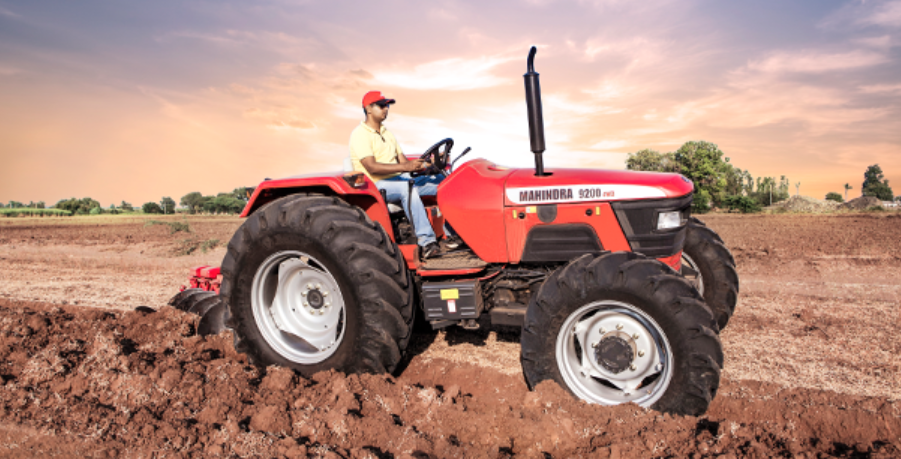
Productivity is the measure that matters most in farming. It determines whether a harvest covers costs, whether a family eats well, and whether a farming business grows or stagnates. Across the world, farmers are under pressure to produce more from the same or shrinking land resources, with fewer hands available to do the work.
Agricultural mechanization is the most powerful and proven answer to this challenge. By replacing or augmenting manual labour with purpose-built machinery, farmers can work faster, more precisely, and more consistently than was ever possible by hand.
The Productivity Gap That Mechanization Closes
In many parts of the world, a significant productivity gap exists between farmers who use mechanized equipment and those who rely primarily on manual methods. This gap is not just about speed. It is about quality, timing, and consistency.
Planting at the right time, applying inputs at the right rate, and harvesting before weather conditions turn are all operations where delays cause measurable yield losses. Farm mechanization allows farmers to complete these critical operations within the optimal window, something that is simply not achievable at scale with manual labour alone.
Soil Preparation: Where Mechanization Delivers Immediate Impact
Soil health is the foundation of crop productivity, and the quality of soil preparation directly influences what grows in it. Mechanized tillage using tractors, rotavators, disc harrows, and MB ploughs achieves a depth, uniformity, and consistency of soil preparation that no manual tool can replicate.
Well-prepared soil holds moisture better, allows roots to penetrate more deeply, and supports healthier, more uniform crop emergence. For farmers making their first investment in agricultural machinery, starting with tillage equipment typically delivers the fastest and most visible return.
Seeding and Planting Precision
One of the most significant productivity gains from agricultural mechanization comes at the seeding stage. Mechanized seed drills and transplanters place seeds or seedlings at precisely the right depth, spacing, and rate across the entire field.
Compare this to manual broadcasting, where seed distribution is inherently uneven, planting depth varies, and seed-to-soil contact is inconsistent. The result of mechanized planting is a more uniform crop stand, better use of inputs, and ultimately a higher and more consistent yield.
Rice transplanters, in particular, have transformed paddy cultivation across South and Southeast Asia, reducing labour requirements by up to 80 percent while significantly improving crop establishment quality.
Smart Farming Solutions for Smarter Input Use
Modern agricultural machinery does not just replace labour. It makes every input go further. Smart farming solutions that combine precision sensors, GPS guidance, and variable rate technology allow farmers to apply fertiliser, water, and crop protection products at exactly the rate each part of the field requires, rather than applying a blanket rate across the entire area.
The result is less waste, lower input costs, and reduced environmental impact, alongside better crop performance in the areas of the field that need the most attention. For farmers operating on tight margins, this level of precision can make the difference between a profitable season and a difficult one.
Harvesting at the Right Moment
Timing at harvest is critical. Crops left in the field too long after maturity lose quality and are vulnerable to weather damage. Harvesting too early reduces yield and grade. Mechanized harvesters allow farmers to move quickly through fields at exactly the right moment, capturing the maximum value from every crop cycle.
For large farms, the speed advantage of agricultural machinery at harvest time is particularly valuable. What would take weeks with manual labour can be completed in days with the right mechanized equipment, reducing losses and improving the quality of produce reaching the market.
Making Mechanization Accessible
A common barrier to farm mechanization is the upfront cost of equipment. Across many emerging markets, governments, development organisations, and manufacturers are working to address this through subsidised financing schemes, equipment hire services, and cooperative ownership models that spread the cost across multiple farmers.
Custom hiring centres, where farmers can access mechanized equipment on a per-use basis without owning it outright, have expanded access to smart farming solutions across regions where individual ownership was previously out of reach.
A Foundation for the Future
Agricultural mechanization is not a single investment. It is a journey. Farmers who begin with basic tillage equipment and build their mechanized capability over time consistently outperform those who remain dependent on manual methods.
The combination of the right agricultural machinery, the right technical knowledge, and the right support from manufacturers and dealers creates a foundation for sustained productivity growth that benefits not just individual farming households but entire communities and food systems.
The farmers who invest in mechanization today are building the farms that will feed the world tomorrow.


More Stories
Revving Up Innovation: The Secret Life of Motor Parts You Never Knew
Reviving Your Ride: Unconventional Motor Maintenance Hacks for Peak Performance
Revive Your Ride: Innovative Motor Repair Hacks for Peak Performance